GLP3
Price range: $114.99 through $279.99
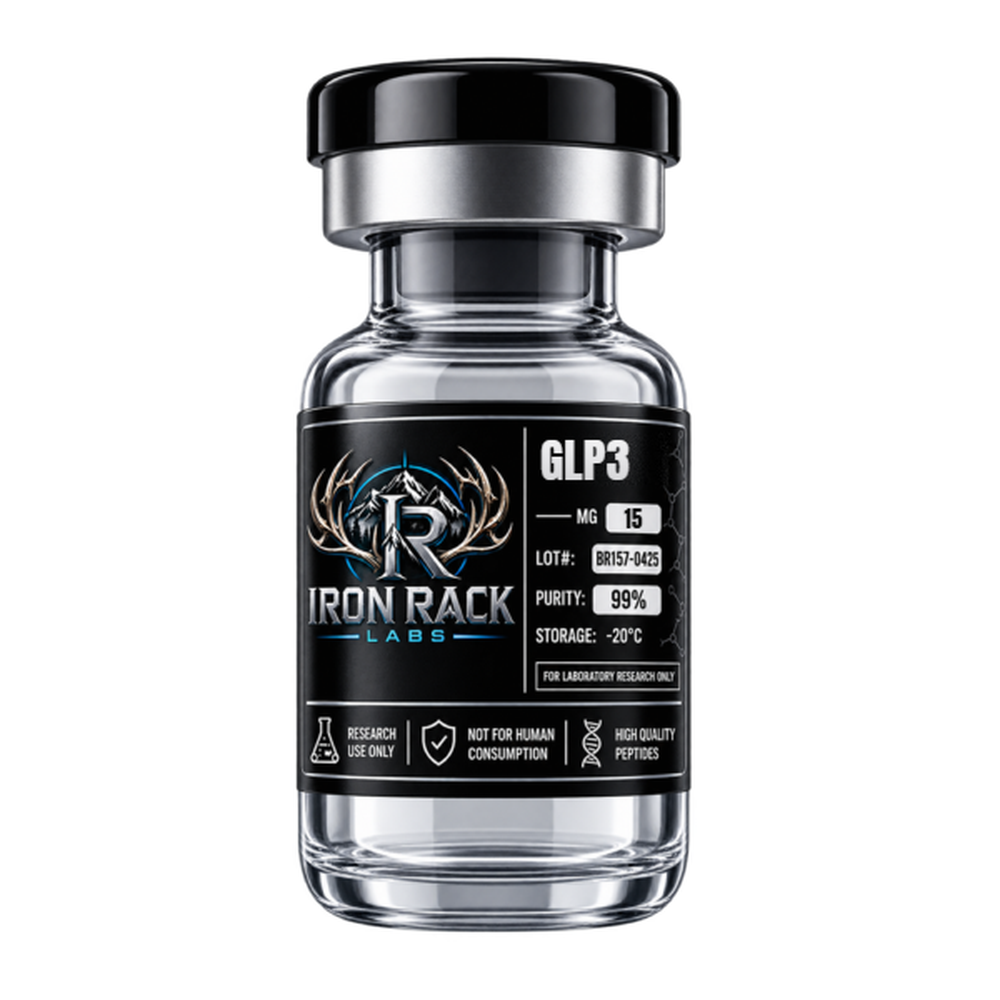
GLP3 is retatrutide, a synthetic 39 amino acid peptide recognized by the GIP, GLP-1 and glucagon receptors, with a C20 diacid side chain, supplied lyophilized as a reference standard for laboratory research. Available in 15mg and 48mg vials.
- 39 residue sequence with non-coded residues including Aib and an acylated lysine side chain
- Lot matched certificate of analysis with every order
- Research use only. Not for human or veterinary use
- Research use only Not for human or veterinary use
- COA with every lot Lot number on the vial matches the certificate
- Third party tested RP-HPLC with LC-MS identity, 98%+ purity spec
- Restricted sale 18+ researchers, US orders only
What is GLP3?
GLP3 is retatrutide, a synthetic 39 amino acid peptide built on a sequence derived from the native GIP hormone, modified so that it is recognized by three receptors: GIP, GLP-1 and glucagon. Several non-coded amino acids, including alpha-aminoisobutyric acid (Aib), replace native residues, the C terminus is amidated, and a C20 fatty diacid chain is attached to a lysine side chain through a linker. It is supplied as a lyophilized powder for laboratory research use as a reference standard, in 15mg and 48mg vials.
GLP3 (retatrutide) structure and modifications
The molecular weight is approximately 4731 Da. The Aib residue at position 2 removes the dipeptidyl peptidase-4 cleavage site found at the N terminus of the native sequence, and the additional non-coded residues are placed at sites that are otherwise vulnerable to enzymatic cleavage. The acylated lysine side chain drives albumin binding, which dominates its behaviour in binding assays. Both features are visible analytically: the side chain shifts retention substantially under reversed phase conditions and gives a defined mass increment under LC-MS.
Where this material appears in the literature
Retatrutide appears in receptor pharmacology, particularly in work on peptides that act at more than one receptor, in peptide chemistry literature on acylation strategies, and in bioanalytical method development. It is an investigational compound and is not an approved drug. Iron Rack Labs supplies the material as a laboratory reference standard and makes no claim about what it does in any living subject.
Related material in the catalogue
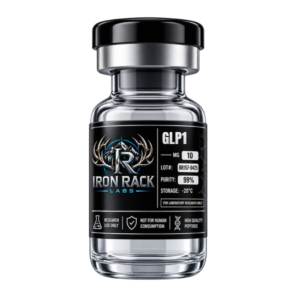
GLP3 is held under reference standards, alongside GLP1 (semaglutide) and GLP2 (tirzepatide), the other GLP-class reference sequences in the catalogue.
Analysis and certification
Every lot is analyzed by an independent laboratory before release, using RP-HPLC for purity and LC-MS for identity confirmation. The certificate of analysis is published against the lot number rather than against the product page, so the document you read is the document for the vial you receive. The lot number printed on the vial label is the link between the two.
Purity specification
Lots are released against a ≥99% purity specification, determined by RP-HPLC peak area. A specification is a release threshold, not a description of every lot. The measured figure for the lot you receive is stated on its certificate of analysis and may sit above the specification.
Where a measured figure and the specification differ, the certificate is the record that applies to your material. Analytical figures relate to the lot they are published against and carry no implication of suitability for any purpose beyond laboratory research.
Research use only
Iron Rack Labs supplies this material as a reference standard for laboratory research. It is not supplied for any use in humans or animals, it is not a drug, dietary supplement, food or cosmetic, and nothing on this page describes or implies any such use. Sale is restricted to persons aged 18 or over who are qualified researchers or who purchase on behalf of a research institution, laboratory or business.
| Strength | 15mg, 48mg |
|---|
| Compound | Retatrutide |
|---|---|
| Class | Synthetic peptide |
| Amino acids | 39 |
| Appearance | Lyophilized peptide powder |
| Purity specification | ≥99% |
| Purity method | HPLC |
| Identity method | Mass spectrometry |
| Material type | Research reference standard |
| Intended applications | In-vitro binding assays, receptor selectivity profiling and analytical method development |
| Research use | For in-vitro laboratory research only |
Characterization. Values above describe Retatrutide as supplied. Lot-specific analytical results, including measured purity and identity confirmation, should be stated on the certificate of analysis.
How this material is tested
Analytical testing is performed to verify the purity and identity of the supplied research reference material.
- HPLC, for purity. High-performance liquid chromatography is used to assess the purity of the peptide. Retatrutide is supplied to a purity specification of ≥99%.
- Mass spectrometry, for identity. Mass spectrometric analysis is used to confirm that the detected molecular mass corresponds to the expected peptide material.
A lot-specific certificate of analysis should identify the compound, lot number, analytical methods and measured test results applicable to the material supplied.
Storing Retatrutide
Retatrutide is supplied as a lyophilized research reference standard and should be transferred to appropriate cold storage on arrival. Keep the sealed vial dry, protected from light and moisture, and follow any lot-specific storage conditions stated on the product label or certificate of analysis. The lyophilized solid should remain sealed until required for laboratory use.
Preparing stock solutions
Prepare stock solutions using sterile water or another aqueous solvent or buffer appropriate to the analytical method being performed. Select a concentration suited to the assay and record it clearly in mg/mL or another appropriate laboratory unit.
Allow the vial to reach room temperature before opening to reduce the risk of condensation. Add solvent carefully down the inside wall of the vial and allow the material to dissolve with gentle mixing rather than vigorous agitation.
Solution stability can vary with concentration, solvent composition, pH, temperature and storage conditions. Prepare solutions as close as practical to the point of use and, where frozen storage is required, divide material into suitable aliquots to reduce repeated freeze-thaw cycles.
On arrival
Check that the vial is intact and securely sealed, that the compound name and labeled quantity match your order, and that the lot number on the vial corresponds with the certificate of analysis supplied or published for that lot.
If any information does not match, or if the vial or packaging appears to have been damaged during transit, contact us before using the material. Problems visible on arrival should be reported promptly so that they can be investigated appropriately.
Handling and disposal
Assess the hazards of Retatrutide before handling and use appropriate laboratory controls, personal protective equipment and handling procedures. Toxicological properties may not be fully characterized, so the material should be treated as potentially hazardous and handled only by suitably trained personnel.
Retatrutide is supplied exclusively for in-vitro laboratory research and analytical use. It is not intended for human or veterinary use, therapeutic use, diagnostic use, consumption or administration to any living organism.
Dispose of unused material, vials and associated packaging in accordance with applicable regulations and your institution's laboratory waste procedures.
Record keeping
Record the lot number at the point of first use, together with the date the vial was opened and the concentration and solvent system of any stock solution prepared.
Certificates of analysis are lot-specific, so retaining the lot number provides the link between experimental results and the analytical data for the exact material used. Maintaining this information supports traceability, reproducibility and later review of laboratory results.
Need a compound that is not listed?
Tell the lab which material and what quantity you need and we will confirm stock, lot availability and lead time. Research use only.
Contact The Lab