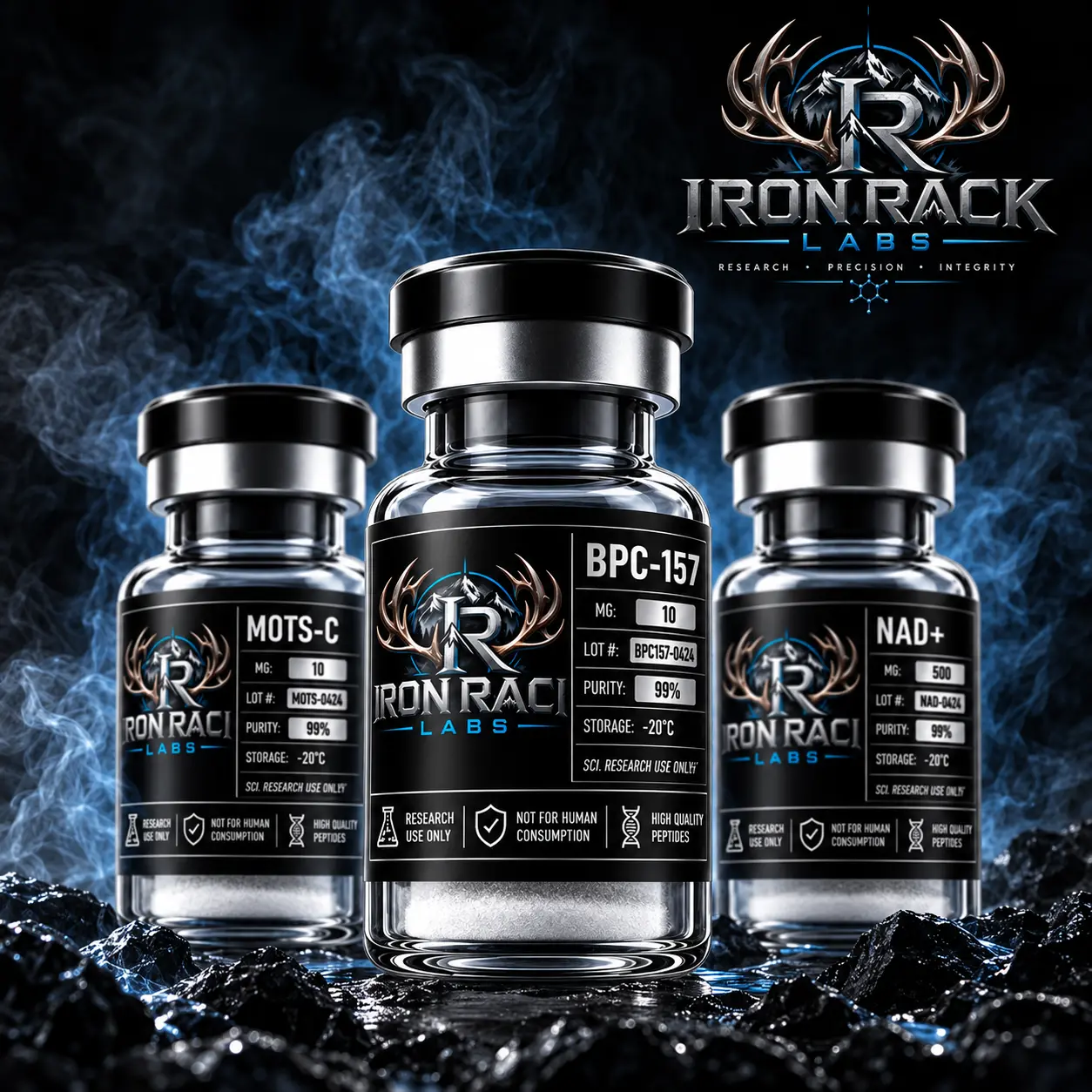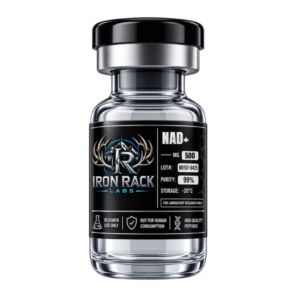
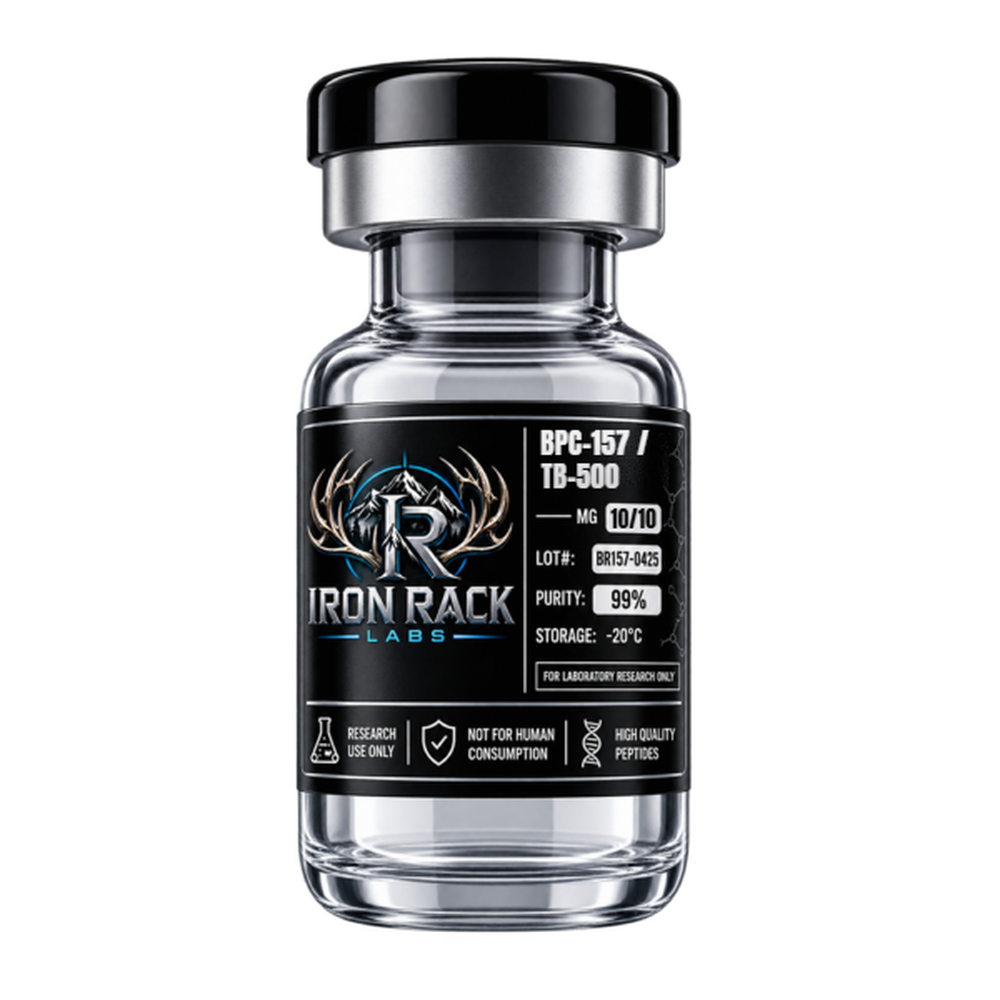
BPC-157 / TB-500 Blend 10mg/10mg
$99.99
Two peptides co-lyophilized in a single vial, 10mg of BPC-157 with 10mg of TB-500, supplied as a reference preparation for laboratory research.
- Both components analyzed and reported separately on the certificate
- Lot matched certificate of analysis with every order
- Research use only. Not for human or veterinary use
50 in stock
- Research use only Not for human or veterinary use
- COA with every lot Lot number on the vial matches the certificate
- Third party tested RP-HPLC with LC-MS identity, 98%+ purity spec
- Restricted sale 18+ researchers, US orders only
What is the BPC-157 / TB-500 blend?
This is a co-lyophilized preparation containing two separate synthetic peptides in one vial: 10mg of BPC-157 and 10mg of TB-500. It is supplied for laboratories that work with both sequences in the same experimental series and prefer a single reconstitution step. The two peptides are not conjugated and do not react with one another; they are simply lyophilized together in known quantities.
What is in the vial
BPC-157 is a 15 residue linear peptide, Gly-Glu-Pro-Pro-Pro-Gly-Lys-Pro-Ala-Asp-Asp-Ala-Gly-Leu-Val, molecular weight 1419.54 Da. TB-500 is an acetylated 7 residue peptide, Ac-Leu-Lys-Lys-Thr-Glu-Thr-Gln, molecular weight 889.02 Da, corresponding to residues 17 to 23 of thymosin beta-4, which carry its LKKTET actin binding motif, rather than the full 43 residue protein. Because the two differ substantially in mass and hydrophobicity, they resolve cleanly from each other by RP-HPLC and are straightforward to quantify separately.
Where this material appears in the literature
Both sequences appear in preclinical and in vitro soft tissue literature, and TB-500 also appears in actin binding and cytoskeletal chemistry work. Iron Rack Labs supplies the blend for laboratory investigation of that kind and makes no claim about what either peptide does in any living subject.
Related material in the catalogue
This preparation is held under peptide blends. The single compound presentation of BPC-157 is held separately under mid chain peptides. Use the single compound vials where an experiment needs one sequence at a controlled concentration, and this blend where both are prepared together.
Analysis and certification
Every lot is analyzed by an independent laboratory before release, using RP-HPLC for purity and LC-MS for identity confirmation. The certificate of analysis is published against the lot number rather than against the product page, so the document you read is the document for the vial you receive. The lot number printed on the vial label is the link between the two.
Purity specification
Lots are released against a ≥98% purity specification, determined by RP-HPLC peak area. A specification is a release threshold, not a description of every lot. The measured figure for the lot you receive is stated on its certificate of analysis and may sit above the specification.
Where a measured figure and the specification differ, the certificate is the record that applies to your material. Analytical figures relate to the lot they are published against and carry no implication of suitability for any purpose beyond laboratory research.
Research use only
Iron Rack Labs supplies this material as a reference standard for laboratory research. It is not supplied for any use in humans or animals, it is not a drug, dietary supplement, food or cosmetic, and nothing on this page describes or implies any such use. Sale is restricted to persons aged 18 or over who are qualified researchers or who purchase on behalf of a research institution, laboratory or business.
| Compound | BPC-157 and TB-500 co-lyophilized blend |
|---|---|
| Class | Two synthetic peptides in one vial |
| Component 1 | BPC-157, 15 amino acids, Gly-Glu-Pro-Pro-Pro-Gly-Lys-Pro-Ala-Asp-Asp-Ala-Gly-Leu-Val, 1419.54 Da, CAS 137525-51-0 |
| Component 2 | TB-500, 7 amino acids, Ac-Leu-Lys-Lys-Thr-Glu-Thr-Gln, 889.02 Da, CAS 885340-08-9 |
| Labeled quantity | 10mg BPC-157 and 10mg TB-500 per vial, 20mg total peptide |
| Appearance | White to off white lyophilized powder |
| Purity specification | ≥98% per component |
| Purity method | RP-HPLC, each component integrated separately |
| Identity method | LC-MS, both components confirmed |
| CAS number | Stated on the certificate of analysis |
| Solubility | Soluble in sterile water and aqueous buffers for analytical preparation |
| Content verification | Both components are reported on the certificate for the lot |
Characterization. Values above describe the compound as supplied. The figures for the lot you receive, including measured purity, are stated on its certificate of analysis.
How this material is tested
Two separate analyses are carried out on every lot before release, and both appear on the certificate.
- RP-HPLC, for purity. Reversed phase high performance liquid chromatography separates the material by hydrophobicity. The main peak is integrated against total peak area, and that ratio is the purity figure reported on the certificate.
- LC-MS, for identity. Liquid chromatography coupled to mass spectrometry confirms that the mass of the main peak matches the expected mass for the compound, which is what distinguishes the correct sequence from a closely related one.
A complete certificate carries the compound name, the lot number, the test date, the method, the measured purity and the name of the laboratory. If any of those is missing, or the lot number on the vial does not match the certificate, contact us before using the material.
Storing the BPC-157 / TB-500 blend
Lyophilized material is shipped cold and should be moved into freezer storage on arrival. Store the sealed vial dry at −20°C or below, protected from light and moisture. Returned promptly to those conditions, the dry solid is the most stable form this material takes.
Preparing stock solutions
Prepare stock solutions in sterile water or an appropriate aqueous buffer at a concentration suited to your assay, expressed in mg/mL. Allow the vial to reach room temperature before opening, add solvent down the vial wall rather than directly onto the solid, and let the material dissolve without vigorous agitation. Reconstitute the whole vial and calculate concentrations for both components from the labeled quantities, since the two peptides cannot be separated after co-lyophilization.
Solutions are less stable than the lyophilized solid. Prepare close to the point of use, hold at 2 to 8°C for short periods only, and aliquot before freezing so that repeated freeze and thaw cycles are avoided.
On arrival
Check that the vial is intact and sealed, that the compound name and labeled quantity match your order, and that the lot number on the label matches the certificate published for it. If anything does not match, or the packaging has clearly failed in transit, contact us before using the material. Problems visible on arrival should be reported within 7 days so that a carrier claim remains possible.
Handling and disposal
Assess the hazards of this material before handling it and use appropriate controls and protective equipment. It has not been characterized toxicologically and should be treated as potentially hazardous. Anyone handling it should be trained for the work.
Dispose of unused material, vials and packaging lawfully and in line with your institution's waste procedures.
Record keeping
Record the lot number in your notes at the point of first use, alongside the date the vial was opened and the concentration of any stock prepared. Certificates are published against the lot number rather than the product, so the lot number is the only reliable link between your results and the analytical data for the material that produced them. If a question arises about a result months later, that link is what keeps the work auditable.
What purity specification does this material meet?
Lots are released against a ≥98% specification, determined by RP-HPLC, with identity confirmed by LC-MS. The measured figure for the lot you receive is stated on its certificate of analysis.
How do I match my vial to its certificate?
By lot number. The vial label carries the compound, the labeled quantity and the lot number, and the certificate is published against that same lot number. Record it in your notes at first use.
Can I see a certificate before ordering?
Yes. Every published certificate is in the COA library, and you can contact us to confirm which lot is currently in stock and to receive its certificate directly.
How is it shipped?
Cold, in temperature stable packaging, on a tracked domestic service from our US facility. Outer packaging is plain and does not carry compound names.
Who is eligible to order?
Sale is restricted to persons aged 18 or over who are qualified researchers, or who purchase on behalf of a research institution, laboratory or business. This website is not an offer to supply to the general public.
Is this material suitable for use in humans or animals?
No. It is supplied as a reference standard for laboratory research only. It is not a drug, dietary supplement, food or cosmetic, and it is not supplied for any use in humans or animals.
Need a compound that is not listed?
Tell the lab which material and what quantity you need and we will confirm stock, lot availability and lead time. Research use only.
Contact The Lab